3 Local SEO Trends for 2026 That Will Force Dallas Businesses to Pivot
3 Local SEO Trends for 2026 That Will Force Dallas Businesses to Pivot
The digital landscape of North Texas is undergoing a seismic shift. As we approach 2026, the traditional methods of “ranking on page one” are becoming obsolete. Dallas is no longer just a hub for oil, telecom, and transportation; it has transformed into a high-tech battleground. Under the leadership of visionaries like Jeffrey Stovall, who has been instrumental in the city’s technological overhaul, Dallas is positioning itself as a leader in smart city infrastructure and AI integration. For the local business owner, this means the old playbook is dead. The year 2026 is no longer about simple search results; it is about visibility in the “AI layer.”
This evolution is underscored by the “2026 AI 75 Innovators” in the Dallas-Fort Worth (DFW) metroplex, a group of companies and leaders identified by Dallas Innovates and the Dallas Regional Chamber as the vanguard of the AI revolution. If your business isn’t optimized for this new intelligence-driven ecosystem, you aren’t just losing rank – you are becoming invisible to the very systems that consumers use to make decisions. To survive, you must master google business profile seo and understand that the “Map Pack” is now the primary interface for local commerce. In this guide, we explore the three critical pivots every Dallas business must make to remain relevant.
Before diving into the trends, it is essential to review your current foundation with Dallas SEO Strategies to Dominate Local Search Rankings to ensure you are ready for the advanced shifts coming in 2026.
Trend #1: From Keywords to Conversational AEO (Answer Engine Optimization)
The era of the “keyword” is officially ending. In 2025, we saw the rise of Search Generative Experience (SGE), but by 2026, Dallas consumers have fully transitioned to conversational queries. They are no longer typing “plumber Dallas” into a search bar. Instead, they are asking their AI assistants – whether via phone, car, or wearable – highly specific, intent-driven questions like, “Where is the best plumber near Deep Ellum open now that handles emergency slab leaks?”
This shift is known as Answer Engine Optimization (AEO). Traditional SEO focused on matching words on a page to words in a search box. AEO focuses on providing the definitive answer to a complex problem. AI systems now synthesize data from your website, your reviews, and third-party mentions to create a summarized response. If the AI cannot confidently extract an “answer” from your digital presence, you will not be featured in the summary, regardless of how many backlinks you have.
Data suggests that AI systems now answer over 70% of local intent queries directly within the search interface. This means your content must be structured to satisfy “Answer Engines.” This involves using long-tail, natural language phrases and ensuring your technical infrastructure allows AI crawlers to parse your data instantly. Dallas businesses that continue to optimize for “2025 keywords” are wasting their budgets. You must pivot to conversational content that mirrors how residents in neighborhoods like Uptown or the Bishop Arts District actually speak. To get ahead of this, utilize specialized local seo tools that track conversational intent rather than just volume.
Stop wasting resources on outdated tactics; learn more in our deep dive: Stop Using 2025 Keywords: 4 Dallas SEO Terms Winning Today.
Trend #2: The Rise of Zero-Click Visibility & Visual Citations
The “Zero-Click” phenomenon has reached its peak. In 2026, the goal is no longer to get a user to click through to your website; the goal is to convert them directly on the Google Business Profile (GBP). For many service-based businesses in DFW, the GBP has become a “Primary Ranking Asset” that carries more weight than the actual website. If a customer can see your reviews, your pricing, your availability, and your location without ever leaving the search results, they will take the path of least resistance.
However, the new frontier of 2026 is the “Visual Citation.” Google’s Vision AI has become incredibly sophisticated. It no longer just “sees” an image; it understands the context. If you are a med spa in Highland Park, Google is looking for visual proof of your equipment, your staff in action, and the cleanliness of your facility. These images act as “Visual Citations” that verify your business’s claims. High-resolution, geo-tagged photos and the burgeoning trend of “Video Citations” – short, informative clips embedded directly into your profile – are now mandatory for ranking.
This is where many Dallas agencies fail. They focus on text while ignoring the fact that Google is prioritizing profiles with rich, recent visual data. Using google maps seo tools to monitor how your visual assets are performing is critical. Clicks are dropping, but “impressions” and “direct calls” are the new KPIs. If your profile looks like a ghost town from 2022, you are losing leads to competitors who are treating their GBP like a live social media feed.
If you are wondering why your engagement is stagnant, check out: Is Your Dallas SEO Agency Still Ignoring Video Citations? [2026].
Trend #3: Breaking the “Two-Mile Wall” & Proximity Logic
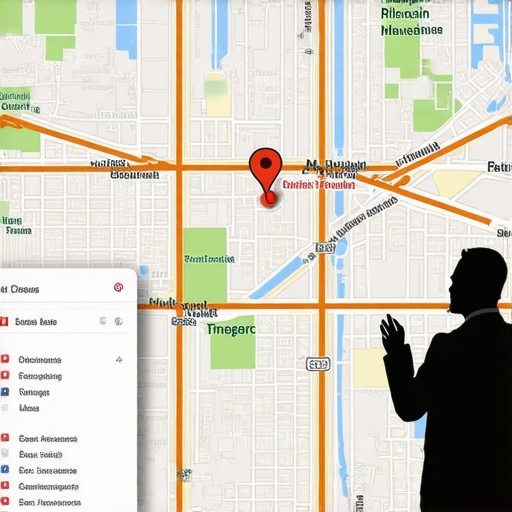
Every Dallas business owner knows the frustration of the “Two-Mile Wall.” You might rank #1 for your services in the Design District, but the moment a potential customer crosses the North Texas Tollway or heads south past I-35, your business disappears from the Map Pack. This is due to Google’s heavy reliance on proximity – the physical distance between the searcher and the business. In a sprawling metroplex like Dallas, this proximity logic can be a death sentence for growth.
In 2026, the trend is about signaling “Entity Authority” to break this wall. To rank google business profile listings beyond your immediate physical radius, you must prove to the algorithm that your business is the most *relevant* and *prominent* choice for the entire region, not just the nearest one. This involves a concept we call “Map Shadows” – areas where your business should rank but is being blocked by a more “authoritative” entity further away.
To overcome the “Tollway Effect,” Dallas businesses must employ hyper-local content strategies that link their brand to multiple neighborhoods. This isn’t just about mentioning “Plano” or “Frisco” in your footer. It’s about creating location-siloed content, generating reviews from diverse zip codes, and building local backlinks from neighborhood-specific organizations. By increasing your “Prominence” and “Relevance,” you can effectively push your “Map Pin” into the next zip code, bypassing the strict proximity filters that limit your reach.
For a technical breakdown on expanding your reach, read: The Two-Mile Wall: How to Push Your Dallas Map Pin into the Next Zip Code.
The Dallas Pivot: A 2026 Action Plan
If you want to dominate the DFW market in 2026, you cannot wait for the algorithm to change – you must change your strategy now. The pivot requires a move away from generic SEO and toward a hyper-local, AI-ready framework. Here is your immediate checklist:
- Audit Your Entity: Ensure your NAP (Name, Address, Phone) data is consistent across all high-authority Dallas directories. Any discrepancy is a signal of untrustworthiness to AI models.
- Implement Local Schema Markup: Use advanced Schema to tell search engines exactly what services you offer, your hours, and your service area in a language AI can instantly digest.
- Deploy Video Citations: Start producing 15-second “proof of work” videos for every major project or service call and upload them to your GBP.
- Neighborhood Siloing: Create dedicated pages for specific Dallas neighborhoods (e.g., Kessler Park, Lake Highlands, Preston Hollow) with unique, helpful content that isn’t just a copy-paste job.
- Leverage Specialized Tech: Use a google maps ranking service to identify where your “Map Shadows” are and target those specific gaps with geo-targeted ad spend and review generation.
The competition in Dallas is fierce, and the “Pin Jump” glitch – where businesses randomly lose rank due to minor algorithm shifts – is more common than ever. Staying ahead requires constant monitoring and a willingness to adopt tools that competitors haven’t discovered yet. For more tactical advice, see: 3 Dallas Local Pack Tweaks That Beat Zero-Click Leads in 2026.
Conclusion
The “old ways” of 2025 are dead. In the Dallas of 2026, search is conversational, visual, and highly localized. If your business is still relying on basic keyword stuffing and a static website, you are handing your market share to the innovators who understand the AI layer. The “Two-Mile Wall” can be broken, and Zero-Click searches can be turned into high-value leads, but only if you pivot your strategy today.
Don’t let your business get left behind in the North Texas tech surge. Contact John Buchanan today for a specialized Dallas Map Pack audit and discover how to make your business the definitive answer in the AI era. Contact Us.