The Hidden Reason the Maps Algorithm Keeps Your Dallas Pin on Page 2
The Hidden Reason the Maps Algorithm Keeps Your Dallas Pin on Page 2
By Sunil S. – Dallas SEO Experts
The Page 2 Purgatory in Dallas
If you are running a plumbing company in North Dallas, a law firm in the Central Business District, or a dental clinic in Plano, you know the frustration. You’ve spent months – maybe years – collecting five-star reviews. You’ve uploaded high-resolution photos of your team. You’ve filled out every single field in your dashboard. Yet, when you search for your primary services, you’re nowhere to be found in the “Three Pack.” Instead, you’re buried on Page 2, watching competitors with half your reviews and inferior websites soak up all the leads.
In the Dallas-Fort Worth metroplex, Page 2 isn’t just a ranking; it’s a graveyard. Research data shows that 46% of all Google searches have local intent, and the vast majority of those clicks never make it past the first three results. You aren’t losing because your business is worse; you’re losing because of a phenomenon I call “Map Shadows” and the invisible “Proximity Wall.”
As a partner at The Dallas SEO Experts with over 12 years in the trenches of DFW local search, I’ve seen the algorithm evolve from a simple directory to a complex, AI-driven spatial processor. The reason you are stuck isn’t a lack of effort; it’s a lack of understanding of how Google treats Dallas geography. In this deep dive, we are going to dismantle the “Hidden Reason” your pin won’t budge and provide the 2026-ready blueprint to break through the noise.
The Trinity of Local Ranking in 2026
To understand why your Dallas pin is underperforming, we have to look at the three pillars Google uses to rank businesses: Proximity, Relevance, and Prominence. In a sprawling, high-density metro like DFW, these factors aren’t weighted equally, and the way they interact is more aggressive than in smaller markets.
Proximity is the “hard” factor. It is the distance between the searcher and your physical office. However, many Dallas business owners mistake proximity for a fixed radius. It isn’t. In 2026, proximity is fluid, influenced by traffic patterns and neighborhood boundaries. Relevance is how well your google business profile seo matches what the user is looking for. Prominence is how well-known your business is across the web – think backlinks, local citations, and brand mentions.
While you can’t move your building, you can manipulate relevance and prominence to “stretch” your proximity. This is the core of google business profile optimization. If you aren’t actively teaching the algorithm that your Relevance and Prominence outweigh a competitor’s Proximity, you will stay on Page 2. For a deeper look at these fundamentals, check out our guide on Dallas SEO Strategies to Dominate Local Search Rankings and Mastering Google Maps Optimization for Texas Businesses.
The “Two-Mile Wall” & The Highway Barrier
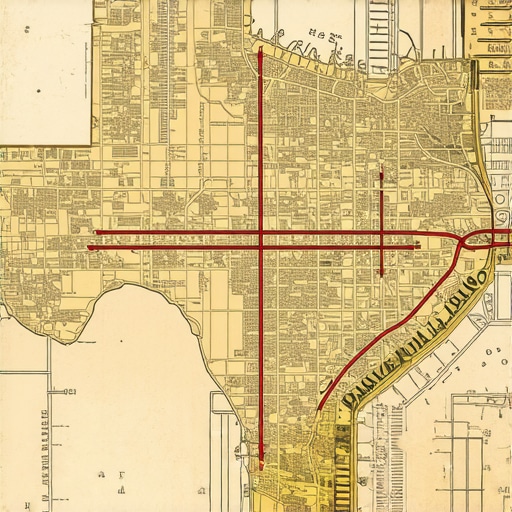
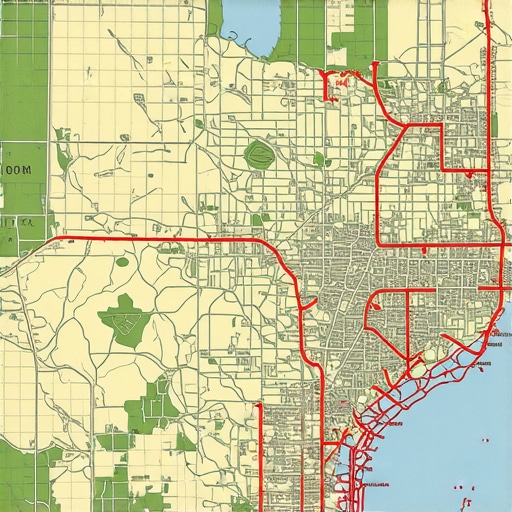
This is the “Hidden Reason” most Dallas agencies won’t tell you about: The Dallas geography acts as a series of algorithmic borders. In the SEO world, we call this the Two-Mile Wall. In a city like Dallas, Google’s algorithm is highly sensitive to major infrastructure. The North Texas Tollway, I-35, I-75 (Central Expressway), and I-635 aren’t just roads; they are digital fences.
If your office is located in the Design District, you might dominate searches within a 1.5-mile radius. But the moment a user crosses I-35 into Trinity Groves, your pin disappears. This is because Google’s local algorithm assumes that Dallas drivers are “barrier-sensitive.” The algorithm “shadows” your business based on the difficulty of travel and historical user behavior. If searchers rarely cross the Tollway to reach a business like yours, Google stops showing you to them.
Furthermore, “Map Shadows” occur in high-density areas like Uptown or Victory Park. The sheer volume of businesses in these “vertical neighborhoods” creates a massive amount of “noise.” If you are located at the base of a high-rise, the algorithm may struggle to distinguish your physical location from dozens of others in the same “Map Shadow,” leading to a suppression of your ranking in favor of businesses with clearer, standalone signals. This is precisely Why Your Dallas Shop Disappears Once Customers Cross the Highway and why you need a strategy to push your influence into the next zip code.
Technical Sabotage: Why Your Dallas Pin “Flickers”
Sometimes, the reason you are on Page 2 isn’t about your competition at all – it’s about technical “flickering.” This happens when your pin appears on Page 1 for an hour, then drops to Page 3 the next. In Dallas, this is often caused by the “Pin Jump Glitch” or “Ghosting” due to inconsistent NAP (Name, Address, Phone) data.
If your business was formerly located in Addison but moved to North Dallas, and old citations still exist on the web, Google’s trust in your physical location wavers. When Google is unsure of exactly where you are, it defaults to a lower-ranking position to avoid “misleading” the user. Technical errors in your Local Business Schema can also cause this. If your code doesn’t explicitly define your geo-coordinates and service area, the algorithm will doubt your physical presence.
Data from The Hoth and other industry leaders confirms that link signals remain the #1 ranking factor for organic results, which directly feeds into the Map Pack. If your website lacks high-authority local backlinks from Dallas-specific sources (like the DFW Chamber of Commerce or local news outlets), your Map Pack prominence will suffer. To diagnose these issues, you should use a professional google business profile audit tool like SEO Viper Tools. Identifying these technical gaps is the first step toward stability. For more on this, read about the 5 Schema Errors That Make Google Doubt Your Dallas Shop’s Physical Location.
2026 Strategies: Beyond Basic Keywords
To rank a google business profile seo in 2026, you have to move beyond stuffing keywords into your business name – which, by the way, is a quick ticket to a suspension in the current Dallas climate. You need a hyperlocal content strategy that addresses the specific nuances of Dallas neighborhoods.
- Hyperlocal Neighborhood Signals: Don’t just say you serve “Dallas.” Create landing pages and GBP posts that mention Deep Ellum, The Bishop Arts District, or Lakewood. Mentioning local landmarks like the American Airlines Center or Klyde Warren Park in your updates helps Google associate your business with the actual fabric of the city.
- Video Citations: Standard directory listings are losing weight. Google’s AI now looks for “Video Citations” – short, geotagged videos of your team performing services in Dallas. Uploading these directly to your GBP profile provides “proof of life” that the algorithm loves.
- The “Two-Mile Wall” Push: To beat the proximity wall, you must acquire backlinks from businesses located outside your immediate two-mile radius but within the DFW metro. This tells the algorithm that your relevance is high enough to justify showing your pin to users further away.
Standard map embeds on your contact page are no longer enough. You need dynamic, interactive maps that showcase your service area across specific Dallas zip codes. This is how you execute 3 Dallas SEO Tweaks to Beat the 2-Mile Proximity Wall [2026].
The Role of Advanced Local SEO Software
You cannot win the Dallas market by “eyeballing” your results. Because of the “Two-Mile Wall,” your ranking changes literally every few blocks. If you check your rank while sitting in your office in Far North Dallas, you might see yourself at #1. But what does a customer see at the intersection of Preston Rd and Northwest Highway? Or near the Galleria?
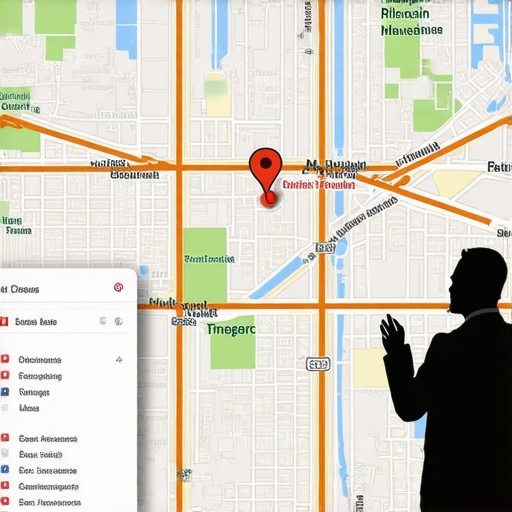
This is why using a google maps rank tracker is non-negotiable. You need a tool that provides a grid-based view of your rankings across the entire city. Only then can you see the “holes” in your coverage. For DFW agencies and serious business owners, I recommend SEO Viper Tools. Their local seo ranking tools allow you to visualize the Proximity Wall in real-time, showing you exactly where your authority drops off so you can target those specific neighborhoods with localized content and backlinks. We’ve used these exact methods to see How We Pulled a Dallas Business Listing Out of the Page 2 Map Pack Trap.
Conclusion & The Dallas Dominance Checklist
Being stuck on Page 2 in Dallas isn’t a permanent sentence; it’s a symptom of a strategy that hasn’t accounted for the city’s unique geography and the algorithm’s 2026 sophistication. Google doesn’t hate your business; it just doesn’t trust your location or your prominence enough to leapfrog the highway barriers.
Your Dallas Dominance Checklist:
- Audit your NAP consistency across all DFW-specific directories.
- Fix your Local Business Schema to eliminate “location doubt.”
- Deploy hyperlocal content focusing on specific Dallas neighborhoods.
- Use a google maps ranking service or tool to track your grid-based proximity.
- Aggressively pursue local backlinks to build prominence that outweighs proximity.
Page 2 is a choice. If you’re ready to break through the Two-Mile Wall and dominate the DFW market, it’s time to stop guessing and start engineering your presence. Perform a 15-minute Dallas Local SEO Audit today, or contact me, Sunil S., at The Dallas SEO Experts for a deep dive into your specific “Map Shadows.”