Why Standard Map Embeds Fail to Move Your Dallas Pin
Why Standard Map Embeds Fail to Move Your Dallas Pin
If you are a business owner in the DFW Metroplex, you’ve likely been told that ranking in the local map pack is the “holy grail” of lead generation. You’ve probably also been told that the way to get there is simple: claim your Google Business Profile, get a few reviews, and embed a Google Map on your contact page. You copy the iframe code from Google Maps, paste it into your WordPress or Shopify site, and wait for the phone to ring.
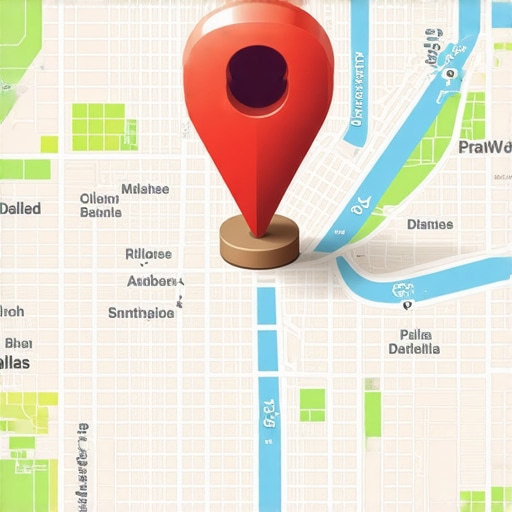
But here is the cold, hard reality: it is 2026, and that standard iframe embed is doing absolutely nothing to move your pin. In a hyper-competitive landscape like Dallas – where every plumber in Mesquite and every law firm in Uptown is fighting for the same three spots – static signals are no longer enough. If your business is stuck on Page 2 or 3 of the map pack, you are likely a victim of the “Iframe Myth.”
Section 1: The “Iframe Myth” and the Dallas Map Pack Reality
The misconception that a standard map embed is a “ranking button” stems from a fundamental misunderstanding of how the Google algorithm interprets local relevance. In the early days of local SEO, an embed was a helpful hint. Today, it’s a baseline requirement that carries almost zero weight on its own. Google’s algorithm for the local map pack is built on three pillars: Proximity, Relevance, and Prominence. However, as we move further into 2026, the weighting of “Proximity” has shifted to “Very High,” making it increasingly difficult to rank outside of your immediate neighborhood without advanced tactics.
In Dallas, relevance isn’t just about what you do; it’s about where you are in relation to the searcher’s intent. A static iframe doesn’t communicate your service area, your active engagement with the community, or your technical authority. It’s just a window to a map. To truly compete, you need a comprehensive google maps ranking service that treats your location as a dynamic data point, not a static image.
To dominate, you must look beyond the basic embed and start focusing on Dallas SEO Strategies to Dominate Local Search Rankings. If your map isn’t integrated with your site’s data structure, Google views it as a decorative element rather than a definitive proof of location.
Section 2: The Dallas “Proximity Wall” & Highway Barriers
Dallas is a city of invisible borders. As an SEO expert who has spent decades navigating the DFW market, I’ve seen time and again how a business in Plano can’t seem to crack the top 3 in Frisco, even if they are only four miles apart. We call this the “2-mile proximity wall.” In 2026, Google’s “Possum” and “Vicinity” algorithm updates have become even more localized.
But in North Texas, it isn’t just about mileage; it’s about “Physical Map Shadows” created by our massive infrastructure. Major arteries like I-635 (The LBJ), the Dallas North Tollway (DNT), and I-35E act as algorithmic borders. Google’s AI understands transit patterns. If a user is south of I-635, Google is less likely to show them a service provider north of the highway because the “perceived travel time” is a barrier.
Standard map embeds fail because they don’t provide the “geo-relevance” needed to jump these barriers. They don’t tell Google that you regularly service clients across the Tollway. To fix this, you need to understand Why Your Google Maps Texas Reach Ends at the Highway [2026 Fix]. Breaking the proximity wall requires more than a pin; it requires hyperlocal content clusters and location-specific landing pages that signal to Google that your “relevance” outweighs the “proximity” penalty.
Section 3: Why 66% of Dallas Sites are Failing
Recent research into the DFW market reveals a staggering statistic: 66% of local sites are missing basic local SEO fundamentals. This includes incomplete metadata, poor page hierarchy, and a total lack of structured data. Many business owners believe that because they have a “Dallas” address, Google automatically knows where they are.
The “SEO-GEO gap” is real. While the standard map embed shows a location, the underlying code of the website often fails to reinforce it. If your header tags don’t mention your neighborhood (like Bishop Arts, Preston Hollow, or Lower Greenville) and your image alt-text is generic, the map embed can’t save you. Furthermore, as we enter the era of the “agentic web,” where AI agents perform searches for users, these agents require clean, structured data to verify your business’s existence.
If you’re wondering where you stand, you should perform The 15-Minute Dallas Local SEO Audit That Exposes Why Competitors Outrank You. Most businesses will find that they are failing to use essential local seo tools to bridge the gap between their physical location and their digital presence. Without these tools, you are essentially invisible to the 2026 algorithm.
Section 4: Technical Failures: CID, Coordinates, and Schema
Let’s get technical. Why does a standard iframe fail where an advanced integration succeeds? It comes down to how Google connects the dots. A standard embed is just a link to a visual map. An advanced local SEO strategy involves connecting the website’s Schema markup directly to the Google Business Profile (GBP) CID (Cluster ID) link.
Your CID is a unique identifier that Google uses to group all your business information across the web. If your website doesn’t explicitly reference this ID in its JSON-LD Schema, you are forcing Google to “guess” that the website and the map pin belong to the same entity. In a city as crowded as Dallas, Google doesn’t like to guess.
Common technical failures include:
- Coordinate Mismatch: The latitude and longitude in your Schema don’t perfectly match the GBP pin.
- Missing LocalBusiness Schema: Failing to use specific types like “PlumbingService” or “LegalService” within the Dallas context.
- Static Zoom Levels: Standard embeds often zoom too far out or in; the ideal zoom should cover a slightly larger area than the immediate service radius to provide geographic context (e.g., showing nearby landmarks like White Rock Lake or the American Airlines Center).
To avoid these pitfalls, you must audit your site for 5 Schema Errors That Make Google Doubt Your Dallas Shop’s Physical Location. Proper google business profile optimization ensures that every technical signal points to the same physical spot on the earth.
Section 5: The 2026 Shift: Video Citations and Agentic Search
By 2026, the local search landscape has shifted away from static signals toward “live” engagement. Google now prioritizes businesses that demonstrate real-time activity within their city. This is where “Video Citations” come into play. A video citation is a geo-tagged video (like a YouTube Short or a TikTok) that is embedded on your site and linked to your GBP. It proves you are physically present at the location, performing the work you claim to do.
Agentic search – where AI agents like Gemini or SearchGPT navigate the web for users – looks for these high-trust signals. An agent won’t just look at your map; it will look for recent reviews that mention specific Dallas neighborhoods and video proof of your business in action. If your strategy is still rooted in 2022 tactics, you are being left behind.
Ask yourself: Is Your Dallas SEO Agency Still Ignoring Video Citations? [2026]? If the answer is yes, you are missing out on the primary way to rank google business profile listings in the current era. These live signals provide the “prominence” needed to overcome a lack of proximity.
Section 6: Actionable Fixes: Moving the Pin
If your pin is stuck, it’s time to stop playing it safe with standard embeds. You need a proactive approach to google business profile seo. Here is your 2026 Dallas action plan:
- Audit Your NAP Consistency: Ensure your Name, Address, and Phone number are identical across the web, from your GBP to the footer of your site, to local DFW directories like the Dallas Morning News business listings.
- Implement Hyperlocal Content: Create pages dedicated to specific Dallas neighborhoods. Don’t just target “Dallas”; target “Deep Ellum,” “Lakewood,” and “Fair Park.”
- Use Advanced Local SEO Software: Leverage local seo software to track your “grid ranking.” A single point check isn’t enough; you need to see how your pin performs every 500 feet across the city.
- Optimize Your Map Integration: Replace your standard iframe with a dynamic map that includes your CID link and coordinates in the surrounding code.
For more specific tactics, check out 3 Dallas SEO Tweaks to Beat the 2-Mile Proximity Wall [2026].
Conclusion: Don’t Let a Static Map Hold You Back
Dallas is too competitive for “standard” tactics. If your map pin hasn’t moved in six months, it’s a clear sign that the algorithm doesn’t find your location data authoritative or relevant enough to break through the noise of the Metroplex. A standard map embed is a courtesy to your customers, but it is not a strategy for growth.
To truly dominate the 3-pack, you need a technical audit that looks at your Schema, your CID integration, and your hyperlocal content strategy. Stop relying on basic embeds and start a professional google maps ranking service campaign today. Contact Dallas Map Pack Ranking to get your business the visibility it deserves in the heart of Texas.