
The One Data Discrepancy Still Killing Your Dallas Local Rank
The One Data Discrepancy Still Killing Your Dallas Local Rank
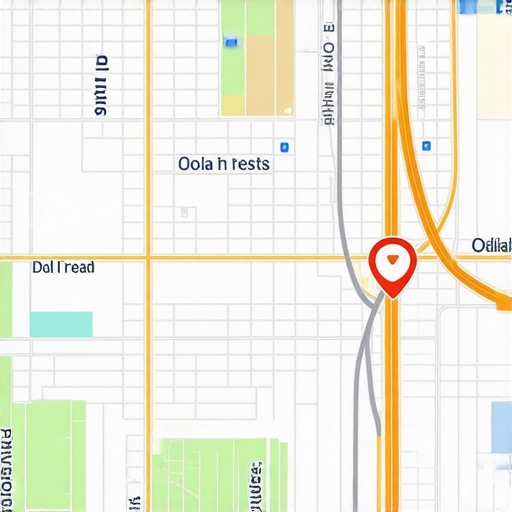
If you are a business owner in the DFW Metroplex, you already know that the Dallas market is one of the most competitive landscapes in the United States. Whether you are a personal injury attorney in Uptown, a roofing contractor in Plano, or a restaurateur in Deep Ellum, your digital storefront is no longer your website – it is your Google Business Profile (GBP). However, as we move through 2026, many Dallas businesses are finding themselves hitting a “Two-Mile Wall.” They rank perfectly within a few blocks of their office, but the moment a potential customer crosses the Dallas North Tollway or heads south of I-635, their business vanishes from the Map Pack.
The reality is that proximity is no longer the sole king of local search. Google’s algorithm has evolved to prioritize three core pillars: Relevance, Distance, and Prominence. While you cannot change your physical distance from a searcher, you have total control over your relevance and prominence. Unfortunately, a single, often-overlooked data discrepancy is likely sabotaging your google business profile seo, telling Google’s algorithm that your business isn’t “trustworthy” enough to display to high-intent local customers.
In this deep dive, I’m going to reveal the “Confidence Killer” that is holding your rankings back and provide a technical roadmap to dominating the Dallas Map Pack in 2026. If you’ve been wondering Dallas SEO Strategies to Dominate Local Search Rankings, you need to start by fixing the foundation of your local data.
The “Confidence Killer”: The One Discrepancy You’re Ignoring
The most significant factor currently “killing” Dallas local rankings isn’t a lack of reviews or a slow website – it is **NAP (Name, Address, Phone) Inconsistency**. While this sounds like “SEO 101,” the way Google interprets this data in 2026 has become far more sophisticated. Google operates as an “answer engine.” When a user searches for “emergency plumber near me” while standing in the M-Streets, Google wants to provide a guaranteed solution. If Google’s algorithm finds conflicting information about your business across the web, its “Confidence Score” in your location drops.
Think about it from the algorithm’s perspective. If your Google Business Profile says you are located at “123 Main St, Suite 400, Dallas, TX 75201,” but an old Yelp listing says “123 Main Street, #400,” and a niche Dallas contractor directory has an old 972 area code number instead of your current 214 line, the algorithm gets confused. Does the business still exist? Did they move? Is the phone number active? When Google isn’t 100% sure, it suppresses your listing in favor of a competitor who has perfect data alignment.
Research from The Ad Firm highlights that mismatched data makes it nearly impossible for modern AI-driven algorithms to verify a physical location with the precision required for top-tier ranking. In a sprawling city like Dallas, where zip codes like 75201 and 75204 sit side-by-side, even a minor zip code error on a random local citation site can “break” your ranking potential. This is why many businesses see their pins “jump” or disappear entirely. For more on this, check out our guide on 7 Signs Your Texas Maps Ranking Is Being Sabotaged by Old Citation Data.
The 2026 Local SEO Crackdown: Why “Business Name Stuffing” is a Death Sentence
We are currently navigating the fallout of the March 2026 Google Core Update, which specifically targeted local search spam. For years, Dallas business owners used a “hack” to rank higher: they would add keywords to their business name. A law firm named “Smith & Associates” would change their GBP name to “Smith & Associates – Dallas Personal Injury Lawyers.”
As of 2026, this is a fast track to a permanent suspension. According to a recent AD HOC NEWS report, the 2026 crackdown has forced thousands of U.S. small businesses to rethink their strategies. Google is now cross-referencing GBP names with official Secretary of State filings and DBA (Doing Business As) records. If your GBP name doesn’t match your legal business name or the signage on your physical building, you are a target for the “Suspension Filter.”
To survive this era, you must invest in a legitimate google maps ranking service that focuses on brand authority rather than cheap tricks. The goal is to build such high prominence that Google has no choice but to rank you, regardless of whether your keywords are in your title. If you want to 3 Dallas SEO Tweaks to Beat the 2-Mile Proximity Wall [2026], you must prioritize clean, honest data over keyword stuffing.
Technical “Silent Killers” of Dallas Rankings
Beyond NAP consistency, there are several technical errors that act as “silent killers” for your local visibility. These are often buried in the backend of your profile or your website, but they signal to Google that your business is neglected.
1. The 404 “Website” Button
In our audits of Dallas-based service businesses, we find that roughly 15% of Google Business Profiles have a broken link on their “Website” button. This often happens during a site redesign or when moving from HTTP to HTTPS. If a user clicks your “Website” button and hits a 404 error, your ranking will plummet within 48 hours. Google tracks these behavioral signals (clicks that lead to bounces) as a primary ranking factor.
2. Improper Redirects (302 vs. 301)
If you have moved locations or changed your domain, using a 302 (temporary) redirect instead of a 301 (permanent) redirect prevents “link juice” and authority from transferring to your new location. This is a common mistake for businesses expanding from Fort Worth into the Dallas market. If you want to rank higher on google maps, your technical SEO must be flawless.
3. Missing or Incorrect GBP Categories
Google frequently updates its available categories. A business that was simply listed as “Plumber” in 2023 might now need to select “Emergency Plumber,” “Drainage Service,” and “Heating Contractor” to maintain visibility. Failure to audit your categories quarterly means you are missing out on high-intent searches. If you aren’t sure where you stand, a 15-Minute Dallas Local SEO Audit can reveal these gaps quickly.
4. The “Ghost Town Review” Problem
Recent research from Uberall confirms that engagement and behavioral signals – such as how quickly a business responds to reviews and how often new reviews are posted – are now top-tier ranking factors. If your last review was from six months ago, or if you have dozens of reviews with zero owner responses, Google views your profile as “unmanaged.” In the eyes of the algorithm, a “Ghost Town” profile is a risky recommendation for a user.
Hyperlocal Signals: Going Beyond the Basics
To truly dominate the Map Pack in a city as large as Dallas, you have to prove to Google that you are a local authority. A standard map embed on your “Contact Us” page is no longer enough. You need to leverage hyperlocal signals that tie your business to specific Dallas neighborhoods.
One of the most effective ways to do this is through Local Business Schema. This is a specific type of code (JSON-LD) that you add to your website to tell search engines exactly where you are, what you do, and what your service area is. Without this, Google has to “guess” based on your content. With it, you are handing them the answers on a silver platter. However, be careful – many businesses have 5 Schema Errors That Make Google Doubt Your Dallas Shop’s Physical Location, which can actually do more harm than good.
Furthermore, your website content should reflect the geography of your customers. If you are targeting North Dallas, your site should mention landmarks like the Galleria, Cooper Clinic, or local high schools. This creates a “geographical relevance” that helps you break through the proximity wall. You should also be using local seo tools to monitor how your ranking changes street-by-street. If you find that you disappear once customers cross the highway, it’s a sign that your hyperlocal signals are weak. For a deeper look at this phenomenon, read Why Your Dallas Shop Disappears Once Customers Cross the Highway.
Finally, rethink your map strategy. Many experts are now realizing that Standard Google Maps Embeds Aren’t Moving Your Dallas Pin Anymore. Instead, you should be using advanced API integrations and geo-tagged images (EXIF data) to reinforce your physical presence in the DFW area.
The Action Plan: Auditing Your Dallas GBP for 2026
If your rankings have stalled or you’re seeing a “pin jump” glitch, it’s time to stop guessing and start auditing. Follow this step-by-step plan to reclaim your spot at the top of the Dallas Map Pack:
- Step 1: The NAP Cleanse. Use a google business profile audit tool to find every mention of your business online. Look for old phone numbers, slight address variations, and duplicate listings. Use a service to “lock” your correct NAP data across the top 50 citations.
- Step 2: Category Optimization. Review your primary and secondary categories. Ensure they align with the 2026 Google updates. If you are a law firm, don’t just pick “Lawyer” – pick the most specific niche (e.g., “Trial Attorney” or “Divorce Lawyer”).
- Step 3: Implement Advanced Schema. Ensure your website has LocalBusiness schema that includes your geo-coordinates (latitude and longitude), your price range, and your specific Dallas service area.
- Step 4: Monitor the “Shadow Drops.” Use a local seo software to track your rankings on a grid. A single “average” ranking number is useless in Dallas. You need to see how you rank in Frisco vs. how you rank in Lakewood.
- Step 5: Fix the “Pin Jump.” If your pin seems to move or your ranking fluctuates wildly, check for overlapping service areas with other businesses or hidden duplicate profiles. Learn How to Fix the Dallas Local Pack ‘Pin Jump’ Glitch in 2026 to stabilize your position.
- Step 6: Leverage Professional Tools. To stay ahead of the curve, you need access to google maps seo tools and gmb seo tools that can analyze competitor backlink profiles and review velocity.
By executing these steps, you are doing more than just “optimizing” – you are building a fortress of data that Google can trust. In the high-stakes world of local map pack seo, trust is the currency that buys you the #1 spot.
Conclusion: The Path to #1 in Dallas
The Dallas market doesn’t reward “good enough.” With the 2026 algorithm updates, Google is actively filtering out businesses with inconsistent data, keyword-stuffed names, and poor engagement. The “One Discrepancy” of NAP inconsistency might seem small, but in a city where every block is a battleground for search visibility, it is the difference between a phone that rings off the hook and a business that is invisible.
Stop trusting automated reports that tell you everything is “fine.” You need a strategy built on technical precision and hyperlocal authority. Whether you choose to use google business profile optimization software or hire a dedicated agency, the time to act is now before your competitors lock in their dominance.
Ready to see what’s really happening with your rankings? Stop guessing and get a real audit from a Dallas expert who understands the unique geography of the DFW Metroplex. Contact Us today to start your journey to the top of the Map Pack.
About the Author: John Buchanan is a seasoned SEO expert and the leading authority on Dallas-area search engine optimization. With over 15 years of experience helping DFW businesses dominate the local search results, John specializes in navigating the technical complexities of Google’s ever-changing local algorithm. When he isn’t auditing map packs, you can find him exploring the latest developments in the Dallas tech scene or cheering on the local teams.